|
When the cancer is controlled, the later effect of treatment
on quality of life, in particular fertility, can be a major issue for these young
cancer survivors. Unfortunately, aggressive cancer treatments can cause gonadal
failure. Indeed, most of the patients undergoing hematopoietic
cell transplant will lose fertility due to high dose of chemotherapeutic agents
and/or ionizing
radiation. Where the risk of gonadal failure is high with chemotherapy and radiotherapy,
it is
wise to attempt to safeguard the fertility before treatment. To date, there are
a few options for
fertility preservation in female cancer patients including GnRHa administration
with
chemotherapy, freezing of embryos, oocytes, or ovarian tissue before chemotherapy
and/or
radiotherapy, transposition of the ovary before radiation, but most of theses
options are
The efficacy of GnRH analog (Lupron, Zoladex, Garnirelix) treatment
to protect the ovary from
cytotoxic cancer therapy is controversial. Nevertheless, most studies showed
that GnRH agonist
can protect immature eggs from chemotherapy in women with cancer. Of note, GnRH
agonist
has no beneficial effect to patients undergoing radiation therapy.
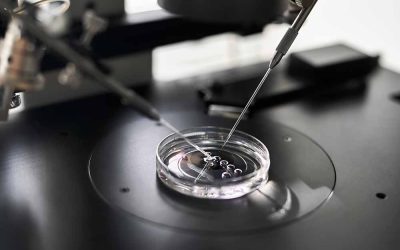
Embryo freezing is a well established technique, but it cannot be an option
for the patient who
does not have a partner, or who cannot delay cancer treatment for more than 2
weeks (as it
requires an IVF procedure). The technology of egg freezing has been improved
last 2-3 years,
and the live birth rate per transfer after 2005 is above 30% in some centers.
However, the
oocyte freezing is not an established technology in most IVF centers, and its
success rate is still
much lower than that of embryo freezing. Egg freezing also requires ovarian stimulation
for 2
weeks, which can delay cancer treatment. Furthermore, the safety of ovarian stimulation
with
fertility medications (such as Follistim, Gonal F) has not been established to
the breast cancer
patients with positive hormone receptors (ERPR).
A new strategy, cryopreservation of ovarian tissue followed by transplantation
of stored
ovarian tissue, may be effective for reinstating fertility for women facing premature
ovarian
failure. For this strategy the ovary should be collected surgically (usually
by laparoscopy) before
freezing. The safety of auto-transplantation of human ovarian tissue is a crucial
issue for cancer
patients. At present, the type of malignancy and the prognosis are prime considerations
to
determine the candidates for this procedure. Ovarian cryopreservation for patients
with systemic
or disseminated malignancies should be discouraged until reliable cancer screening
methods
become available or in vitro culture techniques can be perfected.
back to Fertility Articles Main Page
|